In 1993, before school shootings were a thing, we had a shooting in the high school where I taught. A kid brought a gun into Mod 1 biology and shot a classmate in the back of the head, killing him instantly. You can read a newspaper account HERE.
We had no plans for dealing with that. Administrators went on a blind search for the shooter while nearly 1,000 students sat in their classrooms, most unaware of what had happened, all totally defenseless. Nobody told us to hide, to lock doors, to run. I was in the caf with about a fifty kids and another teacher monitoring study hall. I found out about the homicide 30 minutes after it happened when I stepped into the hallway and asked another teacher, who happened to be heading my way.
The police found the shooter less than an hour after the incident, sitting under a tree near the campus property line.
A few years later, Columbine became a watershed in school shootings because of its magnitude and because it changed the way police respond to active shooter calls.
Schools, including my own, started developing lockdown plans and occasionally staging lockdown drills, but not as frequently as fire drills. The plans were cursory and, in my opinion, thoroughly inadequate. So many what-ifs were not addressed.
In 2004, I started to write a short story about what it is like for a classroom teacher to be locked down in a real incident with twenty terrified teenagers. I wanted it to be realistic; I had my own memories of the ’93 incident, and I did research and tried to get answers to the what-ifs which might range from the annoying (What if a kid has to go to the bathroom?) to the serious (What if the diabetic in class needs her insulin which is in the refrigerator in the nurse’s office?) to the confounding (What if there is a student knocking on your door begging to be let in?) to the life-threatening (What do we do if a shooter gets into the room?).
That only led to more and more questions, and I ended up writing a novel of over 1,000 words that took me 12 years to complete.
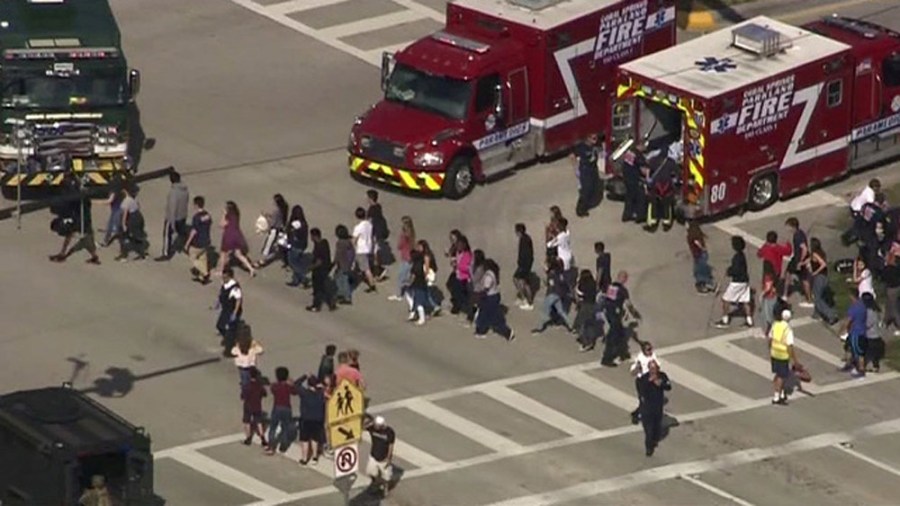
Because of my research, nothing about the shooting in Parkland, Florida last week surprised me. Pulling a fire alarm to ambush students? That’s been done before. A disgruntled student was able to get military-grade weapons? Done multiple times. Hero teachers and adults? Always.
What is different about Parkland is the productive anger being directed at the abettors of gun crime in general and school shootings specifically, the politicians who dismissively send “thoughts and prayers” and don’t even bother to search for solutions.
Reading the Tweets of the Parkland students, listening to their comments, watching Emma Gonzalez “call bs” on spineless adults is inspiring. As any teacher can tell you, reading or listening to your students or former students exude articulate maturity and obliterate teenage stereotypes generates an almost parental pride. I feel that as I listen to the Parkland students.
Let’s hope against hope that this latest school shooting can redeem a tiny fraction of the tragic consequences by serving as a turning point in the discussion of how to prevent more incidents.
The aftermath certainly does feel different this time.
Keep calling bs.


 The Q-View
Q- I have been following your blog for a few months and have enjoyed each one so much. I am a former student of yours who happen to be across the hall the day the school shooting occurred at UP. I have prayed since then that these horrific situations would come to an end and that leaders would step up and do what is right. It feels hopeless but I strongly agree with you, keep calling BS, keeping pushing for change! Thank you for being a great teacher and I look forward to your next blog.
LikeLike
Thanks, Amy!
LikeLike